
Build to activate: when the brand sets the direction.

In most companies today, there’s no shortage of activity. However, there is often a lack of direction and intent.
Nunca ha sido tan fácil activar: lanzar campañas, abrir canales, impulsar iniciativas. Y, sin embargo, cada vez es más habitual encontrar organizaciones que hacen mucho, pero construyen poco. No es un problema de esfuerzo, es un problema de falta de foco y de saturación.
A great paradox: doing more does not always deliver more.
The current environment pushes us towards constant action: optimising, reacting, generating immediate results. And that works… up to a point. Because when everything is activated but nothing is sustained, what is created is not growth, but dispersion.
Accumulation and saturation do not build value; they dilute it. The evidence shows this: brands that balance building and activation achieve greater long-term growth than those focused solely on the short term. And yet, most companies operate in precisely the opposite way.
Branding vs. marketing: essential, but different and complementary.
This is where a fundamental confusion arises, and understanding it is key to finding the right balance. Branding lays the foundations and provides both coherence and continuity, through a guiding thread that brings focus and meaning to what is done and allows each action to build on the latter.
Marketing focuses on activating brands across all touchpoints, bringing them to life. When both go hand in hand, everything works: campaigns don’t just convert, they build; initiatives create impact and project a clear direction; actions don’t simply multiply, they leave a lasting mark.
And when the brand is not well built, marketing loses impact.
When there is a clear focus, it shows.
In this context, Zara is an undisputed benchmark: it has shifted from pursuing a model of growth and expansion to pausing and reflecting, adopting a strategic shift that prioritises excellence in every detail and the reduction of noise in order to build brand relevance.
This shift entails a profound transformation in mindset and a clear intention to create greater value for the customer beyond the product. As a result, high-impact strategic decisions have been driven and aligned in the same direction, such as the significant reduction in the number of physical stores to strengthen control over the quality of the brand experience in a holistic way.
The recently refurbished Serrano store in Madrid, with “El Apartamento”, illustrates this perfectly: a space conceived as a home, featuring limited editions and early releases of collections. Added to this is the integration of technology, along with collaborations with renowned creatives and architects that enrich the brand’s territory, extending it into design, art and culture. The same pattern is replicated, among others, on the Champs-Élysées in Paris or Fifth Avenue in New York: openings conceived as events, in some of the world’s most iconic locations, with an experience that leaves no one indifferent.
Simultaneously, the digital channel grows as a natural extension of the physical environment. The store becomes a destination, a cultural phenomenon. And the results follow: while the number of stores has declined, sales have grown by nearly 22%.
All conceived from the same place: the brand. With focus and without dispersion.
The invisible cost of moving forward without direction.
Zara is a benchmark case, but not all organisations follow this path. The opposite dynamic—doing a lot without a clear direction—rarely appears as an obvious failure, but its effects are cumulative.
It takes ever more effort to achieve the same result. There is an increasing dependence on constant activation. Greater difficulty in differentiating or sustaining value over time. And, above all, a sense of progress that often doesn’t translate into real advancement.
Less, but with intent.
In this context, there is an uncomfortable but necessary question: if tomorrow the most active brands stopped activating, what would remain?
Building a brand is not about doing more, but about ensuring that what is done has continuity and meaning. The brand, understood as a framework, does not simply add more activity. It helps to filter. It introduces clarity. It provides meaning.
Perhaps that is why many of the problems addressed today as tactical are not about execution, but about the lack of a solid framework that gives meaning to everything else. Because in an environment that constantly pushes towards doing more, the real advantage begins with doing less—but with greater judgement and purpose.
How much of what is set in motion today will be generating real value for the business and the brand?

Monika Kural Project Management Director
Share
Outstanding articles
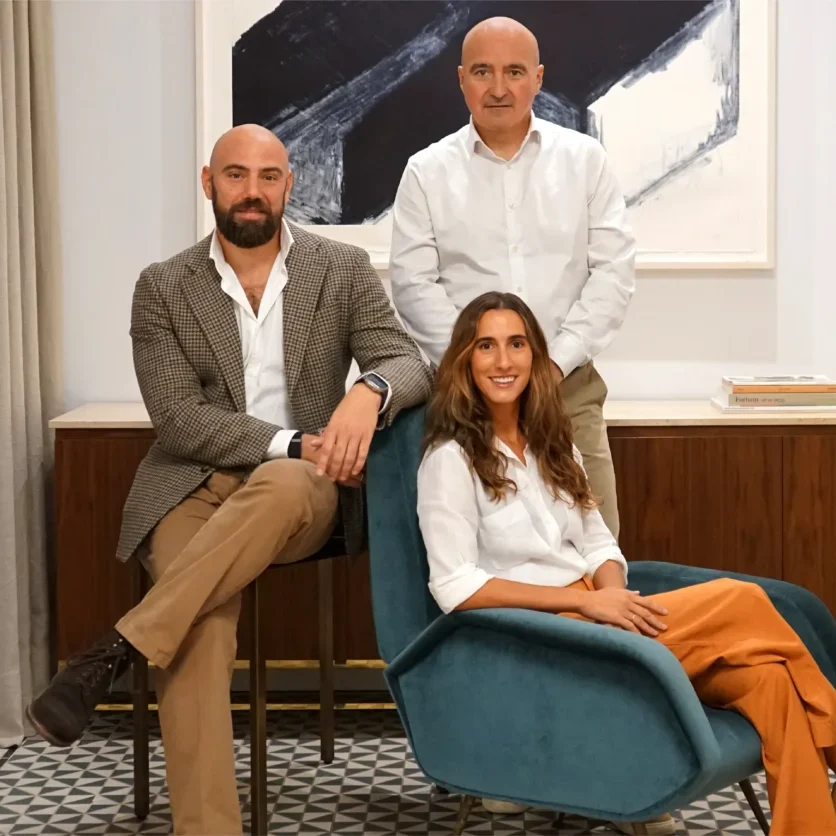
A conversation about the value of a brand in inspiring, aligning, and driving growth
The project began as “DigitalDent”, backed by Alantra Private Equity, with the aim of bringing together a broad network of dental laboratories across Spain under a shared vision.

In the artificial age, brands keep it real.
Trust as a strategic asset for brands in the face of disinformation and deepfakes.

A letter about BrandFor, for Brandfor
It all began with a clear purpose: to transform the potential of brands into a true source of value.